
A guide from someone who grew up on these islands, works remotely, and knows where your productivity will actually thrive.
Picture this. You are sitting in a busy office somewhere in Central Europe. It is February. The sky has been gray for three weeks straight. Your morning coffee feels like a survival tool, not a ritual. Then you scroll past a photo on Instagram: someone working from a laptop on a terrace, blue ocean behind them, wearing a t-shirt in winter. The location tag reads "Las Palmas de Gran Canaria."
That image stays in your mind all day. By Thursday, you are researching flights. By the weekend, you are reading about the best canary island for digital nomads and wondering if this could actually work for you.
I know the feeling. I grew up in the Canary Islands. I have also spent years working remotely from different countries and cities. So I can tell you from personal experience: these islands are not just a pretty background for your video calls. They are one of the most productive remote work environments in Europe. But picking the right island matters more than people think.
In this guide, I will walk you through the top three islands for remote work, explain how each one supports a different kind of lifestyle, and help you choose the best Canary Island for digital nomads based on what actually matters for your productivity, not just the scenery.
Why the Canary Islands Are a Top Destination for Digital Nomads
Before we compare islands, let me explain why the Canary Islands keep showing up on every remote work destination list. It is not just hype.
The archipelago sits off the northwest coast of Africa, but it belongs to Spain. That means European infrastructure, EU consumer protections, and access to the Schengen zone. However, unlike mainland Spain, the islands enjoy a subtropical climate with temperatures between 18°C and 28°C all year. Winter here feels like early summer in most of Europe.
Beyond the weather, there are real practical advantages. Internet speeds across the main islands range from 100 to 600 Mbps via fiber connections. The cost of living is lower than in most Western European capitals. Since 2023, Spain has offered a Digital Nomad Visa that allows non-EU remote workers to live and work legally for up to five years.
Then there is the community factor. The Canary Islands have attracted remote workers for years, especially since the pandemic. This means established coworking spaces, coliving options, regular meetups, and Slack or WhatsApp groups where you can plug into a social scene within days of arriving.
All of these things create an environment where you can focus on your work without the friction that comes with less developed destinations. And if you care about how to plan your week around deep work, energy management, and recovery, these islands give you the conditions to do it right.
Gran Canaria: The Best Canary Island for Digital Nomads Who Want Community
If I had to recommend one island for someone visiting the Canary Islands for the first time as a digital nomad, it would be Gran Canaria. Specifically, Las Palmas de Gran Canaria.
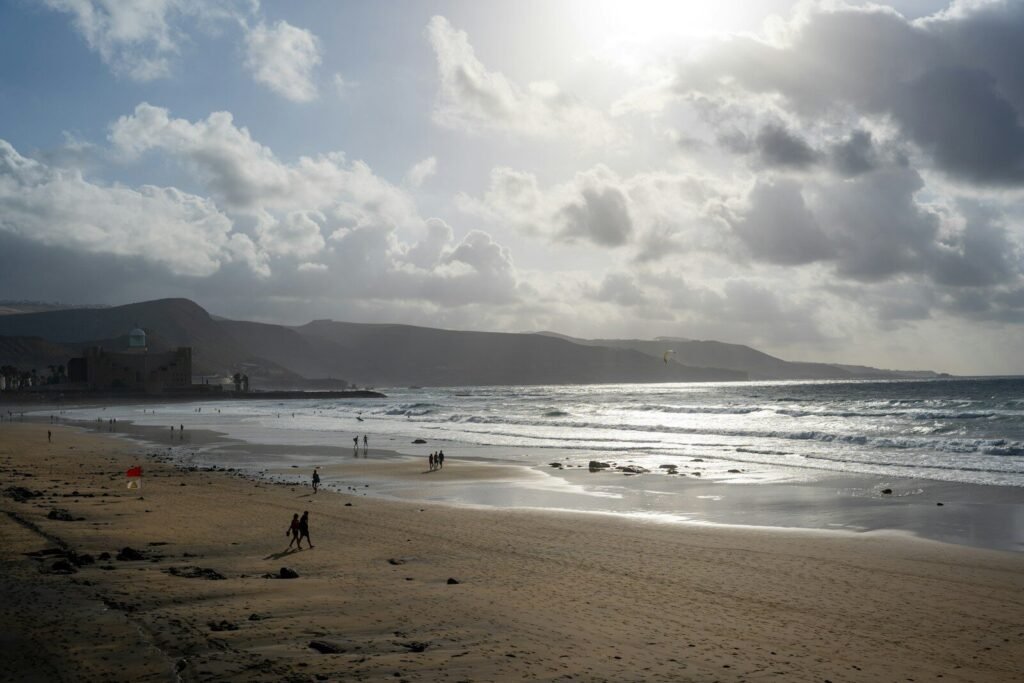
Las Palmas is the largest city in the archipelago. It has an urban energy that reminds you of a European capital, combined with a 3-kilometer beach running through the center of town. You can finish a morning work session at a coworking space and be swimming in the Atlantic by lunchtime.
The Nomad Scene in Las Palmas
What makes Las Palmas stand out is the size and maturity of its digital nomad community. There are more than 25 coworking spaces in the city, along with several coliving options. Facebook groups, WhatsApp channels, and regular events make it easy to meet people quickly. If you are someone who draws energy from social interaction and networking, this is the place.
This matters for your productivity too. One of the biggest traps of remote work is isolation. When you work from home in a foreign city with no community, loneliness creeps in and kills your motivation. Las Palmas eliminates that problem. Within the first week, most nomads find their group, their favorite cafe, and a routine that works.

Cost of Living in Gran Canaria
A one-bedroom apartment near Las Canteras beach costs between 800 and 1,200 euros per month, depending on the season and location. Winter (November to March) is peak season, so prices rise during those months. A quick meal at a local restaurant will run you 8 to 14 euros, a coffee costs about 1.50 euros, and a beer at a bar is around 2 euros.
Overall, a solo digital nomad can live comfortably in Las Palmas on about 1,300 to 1,900 euros per month, including rent, food, coworking membership, and leisure. That is significantly cheaper than cities like Berlin, Amsterdam, or London.
The Trade-offs
Gran Canaria is not perfect. Some nomads report that the food quality in restaurants and supermarkets is not as strong as on the mainland. Apartments tend to be smaller, and some buildings have interior courtyards that make units dark. Also, the growing influx of remote workers has created tension with locals, as rising rents are pushing some residents out of their neighborhoods.
This is something I feel strongly about. If you choose to live in a place, respect it. Learn some Spanish. Shop at local businesses. Understand that your presence has an economic impact on the community. Being a responsible nomad is part of being a productive one.
Tenerife: Best Canary Island for Digital Nomads Who Want Variety
Tenerife is the largest island in the archipelago, and it offers something Gran Canaria does not: variety within a single island. You can choose between a lively city in the north, a quiet mountain village in the center, or a surf town in the south. Each area has a completely different vibe.
North vs. South Tenerife
Santa Cruz de Tenerife, the capital, is a residential city that does not feel touristy. It has several coworking spaces, good cafes for laptop work, and a more local Spanish atmosphere. If you want to immerse yourself in Canarian culture while working remotely, the north of Tenerife is ideal.
The south of the island, around Costa Adeje and Playa de las Americas, is more commercial and tourist oriented. It gets more sun than the north, and it is great if your priorities include surfing, beach time, and a relaxed social scene after work. However, it feels less authentic than the northern side.
Then there is La Orotava, a small colonial town with incredible views of Mount Teide, Spain's highest peak. Coliving spaces like Nine Coliving have set up shop here, offering a more intimate, community-driven experience. If you want a quiet place to do deep work with a small group of like-minded people, La Orotava is a hidden gem.

Why Tenerife Works for Productivity
Tenerife's biggest advantage is that it lets you design your environment to match your work style. In my 4 Vectors Productivity methodology, I talk about four areas that drive real productivity: efficiency, effectiveness, ownership, and wellbeing. Tenerife supports all four in a unique way.
The island's size and variety mean you can optimize for focus during the week (a quiet coliving in the north) and recharge on weekends (hiking Teide, surfing in the south, or exploring Anaga Rural Park). That separation between deep work time and active recovery is exactly what sustains long-term productivity for remote workers. It is similar to the concept of building emergency buffers into your weekly plan to avoid burnout.
Cost of Living in Tenerife
Tenerife is slightly cheaper than Las Palmas for accommodation, especially in the north. A one-bedroom in Santa Cruz can cost between 700 and 1,000 euros per month. Coliving spaces range from 900 to 1,400 euros including workspace access. Daily expenses are similar to Gran Canaria, with meals costing between 7 and 13 euros at local restaurants.
Fuerteventura: Best Canary Island for Digital Nomads Who Want Space and Surf
Fuerteventura is the second-largest island in the chain, but it feels much less populated than Gran Canaria or Tenerife. If your ideal work setup involves wide open landscapes, long empty beaches, and strong winds for kitesurfing or windsurfing, Fuerteventura is calling your name.
Corralejo: The Nomad Hub
Most digital nomads on Fuerteventura base themselves in Corralejo, a resort town in the north. It has a relaxed atmosphere, good restaurants, a few coworking spaces, and quick access to some of the island's best beaches. The surf community here is strong, and many nomads structure their days around morning work sessions and afternoon surf.
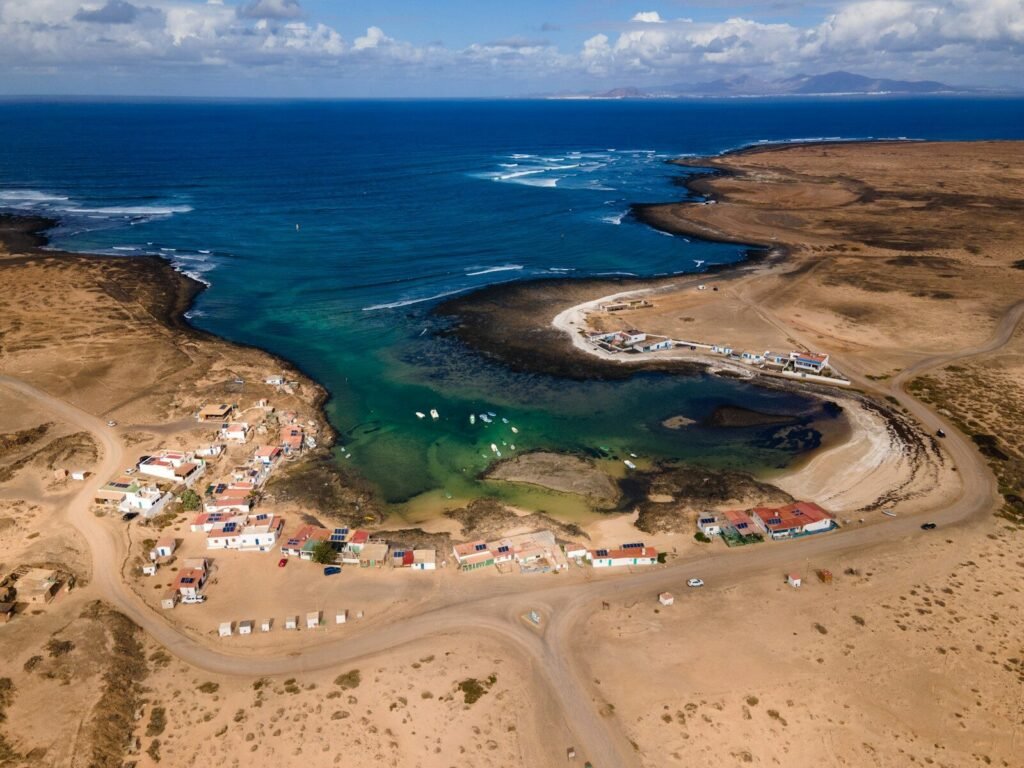
However, Fuerteventura's nomad community is smaller and less established than that in Las Palmas or Santa Cruz. If you need a large social network to stay motivated, you might find it too quiet. On the other hand, if you need solitude and minimal distractions to do your best work, this island delivers.
Connectivity and Infrastructure
Internet in Corralejo and the main towns is reliable, with fiber speeds available. Outside of the main areas, coverage drops slightly. A rental car is essential if you want to explore the island, since public transport is limited compared to Gran Canaria and Tenerife.
Island Comparison: Which One Fits Your Work Style?
| Factor | Gran Canaria | Tenerife | Fuerteventura |
|---|---|---|---|
| Nomad Community Size | Large, very active | Medium, spread out | Small, growing |
| Coworking Spaces | 25+ | 10 to 15 | 3 to 5 |
| Rent (1BR, monthly) | 800 to 1,200 EUR | 700 to 1,000 EUR | 650 to 950 EUR |
| Internet Speed | 100 to 600 Mbps | 100 to 600 Mbps | 100 to 300 Mbps |
| Best For | Social nomads, networking | Variety seekers, deep workers | Surfers, solitude lovers |
| Vibe | Urban beach city | Diverse (city, mountain, coast) | Laid-back, quiet, windswept |
| Solo Nomad Monthly Budget | 1,300 to 1,900 EUR | 1,200 to 1,800 EUR | 1,100 to 1,600 EUR |
The Spain Digital Nomad Visa: What You Need to Know
If you are a non-EU citizen considering the Canary Islands, Spain's Digital Nomad Visa makes it legally straightforward. Introduced under the Startup Act in 2023, this visa allows remote workers to live in Spain for up to one year initially, with the option to extend to five years through a renewable residence permit.
As of 2026, the key requirements include a minimum monthly income of approximately 2,850 euros (200% of Spain's minimum wage), proof of remote employment or freelance work, private health insurance, and a clean criminal record. The application fee is about 73 euros, and processing takes one to two months through a Spanish consulate.
One important detail: at least 80% of your income must come from outside Spain. If you are freelancing, no more than 20% of your revenue can come from Spanish clients. Also, if you plan to stay longer than a year, you will need to spend at least six months per year in Spain to keep your residence valid.
For EU citizens, the process is simpler. You can stay and work without a visa, though you should register with local authorities if you plan to stay more than three months.
If you are weighing up the financial commitment, it helps to understand the full picture of your productivity and time management before you make the jump. Take the free 4 Vectors Productivity assessment to see where your work habits stand today, so you can build a better routine once you arrive.
How to Stay Productive as a Digital Nomad in the Canary Islands
Moving to a new island does not automatically make you more productive. I have seen plenty of remote workers arrive in Las Palmas with big plans, only to spend the first month beach-hopping and socializing without getting much done. The novelty of a new place is exciting, but it fades. What remains is your system.
Match Your Environment to Your Energy
One principle I use in my work with professionals and teams is that productivity comes from aligning your work with your energy cycles. If you are a morning person, protect those early hours for deep work and schedule calls and meetings for the afternoon. The Canary Islands make this easier because the time zone (GMT+0 in winter, GMT+1 in summer) overlaps well with both European and East Coast US business hours.
This is part of the 4 Productivity Vectors approach: efficiency is about how you use your time and tools. Effectiveness is about making progress on high-impact work. Ownership is about taking responsibility for your output. And well-being is about making sure you can sustain the pace.
Build a Routine Before You Explore
Give yourself the first two weeks to lock in your daily structure. Find your coworking spot. Set your work hours. Identify your peak performance window. Once that foundation is solid, you can explore on weekends and evenings without your work suffering.
Think of it like planning your week with emergency buffers. You leave room for the unexpected, but the core structure stays intact. The same logic applies when you relocate to a new island. The structure is your anchor.
Protect Your Wellbeing
The biggest threat to long-term remote work productivity is not distraction. It is burnout. And burnout often comes from neglecting the well-being vector. The Canary Islands give you access to outdoor activities that naturally support mental and physical health: hiking, surfing, swimming, yoga, and trail running. Use them. Build at least one physical activity into your daily routine.
Also, be intentional about social connections. Joining a coworking space is not just about the desk. It is about the people. Having a few trusted colleagues or friends nearby makes a significant difference in your ability to sustain high performance over months, not just weeks.
How Productive Are You Really?
Before you move to a new island, understand where your work habits stand. Take the free 4 Vectors Productivity assessment and get your score in efficiency, effectiveness, ownership, and wellbeing.
Other Islands Worth Considering
The three islands above cover most digital nomads' needs. However, the Canary Islands have seven main islands, and the smaller ones deserve a mention.
Lanzarote offers volcanic landscapes, a quieter pace, and occasional nomad pop-up events. It is a good option if you want something between the activity of Gran Canaria and the solitude of Fuerteventura.
La Palma is lush, mountainous, and ideal for hikers. The nomad infrastructure is minimal, but a growing number of remote workers are discovering it as a place for deep creative work.
La Gomera and El Hierro are the smallest and most remote islands. They attract people who want true seclusion and immersion in nature. The Internet is available but less reliable. These islands are best for short retreats rather than long-term nomad bases.
Picking the Best Canary Island for Digital Nomads: My Recommendation
If you are visiting the Canary Islands for the first time as a remote worker, start with Las Palmas de Gran Canaria. The community, infrastructure, and walkability make it the easiest place to settle in quickly and start producing good work. Once you understand the rhythm of island life, you can explore Tenerife for variety or Fuerteventura for a change of pace.
If you already know what you need and you prefer a quieter, more diverse environment with mountain and coastal options, Tenerife is the better long-term pick. It rewards people who take the time to find their specific spot on the island.
And if surfing, open space, and minimal distraction are what fuel your best work, Fuerteventura will not disappoint.
Whatever island you choose, the Canary Islands offer something rare for remote workers: a place where your productivity and your quality of life can grow together. The weather, the cost of living, the time zone, the visa framework, and the community all align to support a working life that actually feels good.
Key Takeaways
Gran Canaria is the best Canary Island for digital nomads who want an active community, walkable city life, and a mature coworking ecosystem. Tenerife is ideal for nomads who want variety and the ability to design their environment around deep work and active recovery. Fuerteventura is perfect for surf-oriented nomads who thrive in quiet, open settings. Spain's Digital Nomad Visa (2026: minimum income of approximately 2,850 EUR per month) makes it legally simple for non-EU workers. And wherever you land, bring a system for managing your time, energy, and focus. The islands provide the conditions. You provide the discipline.
If you want to build a productivity system that works wherever you are, explore the Productivity Hub for courses, templates, and frameworks designed for knowledge workers and remote teams.
Related Reading
How to Plan the Week (and Actually Stick to It)
The 4 Vectors Productivity Test
How Brilliant Leaders Achieve More by Doing Less
Productivity Hub: Courses, Templates and Resources
Free Productivity Tips for Knowledge Workers